Add Row
Add Element
Add Element
  • Home
  • Categories
    • Social Media Management
    • Video Resources
    • blogging
    • Traffic
  • Media Sites Hub
  • All Posts
  • Social Media Management
  • Video Resources
  • blogging
  • Traffic
  • Media Sites Hub
June 14.2025
1 Minute Read

Instagram Reels promotion: Boost Followers Today

Did you know brands leveraging Instagram Reels promotion achieve a staggering 67% higher reach compared to other formats? As Instagram Reels becomes the most-shared content on the platform, effective promotion is no longer optional—it's a critical growth driver. In this comprehensive guide, you’ll uncover the latest actionable strategies to promote your Instagram Reels, turbocharge your follower base, and unlock the full potential of Instagram’s hottest video feature. Let’s dive into why mastering Instagram Reels promotion is your edge in today’s social media landscape.

Unveiling the Power of Instagram Reels Promotion—Why Your Growth Depends on It

The explosive growth of Instagram Reels has fundamentally transformed how brands, creators, and entrepreneurs ignite virality and reach new audiences. Instagram Reels promotion isn’t just about putting out content; it’s about strategically surfacing your videos where your target audience is most engaged. From the explore page to the dedicated reels tab , promoting reels taps into Instagram’s advanced discovery algorithm and opens the door to thousands of new followers in record time.

Consider the impact: boosted reels are algorithmically prioritized, driving engagement rates that far outpace static images and even Stories. By leveraging Instagram’s paid ad tools, more users see and interact with your content, ultimately converting viewers into followers and customers. If you’ve plateaued in growth—or crave explosive results—deploying a thoughtful Instagram Reels promotion strategy is the game-changer your brand needs.

Instagram Reels promotion strategy vibrant marketer reviewing analytics in modern workspace
  • You’ll discover actionable Instagram Reels promotion methods, why Instagram Reels are vital for follower growth, key elements of successful Reels ads, and expert hacks to outshine competitors.
"Brands leveraging Instagram Reels promotion see an average 67% higher reach compared to other content formats." — Social Media Examiner

Understanding Instagram Reels Promotion: Elevate Your Instagram Reel Strategy

What Exactly Is Instagram Reels Promotion?

Instagram Reels promotion is a targeted approach to amplifying reel content through both organic tactics and paid ad campaigns. Unlike simply posting and hoping your videos get noticed, effective promotion means using Instagram’s advertising platform—such as the Boost button and Ads Manager—to target specific audiences . The goal? Maximize the reach of your instagram reel , increase engagement rates, and attract new followers who resonate with your brand or creative vision. With Instagram’s advanced targeting, you can reach users by interests, behaviors, and demographics, ensuring your best reels find the right eyes every time.

Organic strategies also play a crucial role. Optimizing reels with trending audio, viral effects, and placement on the explore page can boost visibility even without ad spend. However, combining both organic and paid promotion forms a powerful, holistic strategy that consistently drives follower growth.

Why Instagram Reels Outperform Other Formats for Boosting Followers

When it comes to driving follower growth, no format beats the Instagram Reel . Unlike static posts or even Instagram Stories, reels harness Instagram’s discovery algorithm, making them more likely to appear on the explore page or recommended feeds of potential new followers. Reels are designed to capture attention with quick, punchy, and hyper-engaging video content, which is preferred by younger demographics and current media consumption trends.
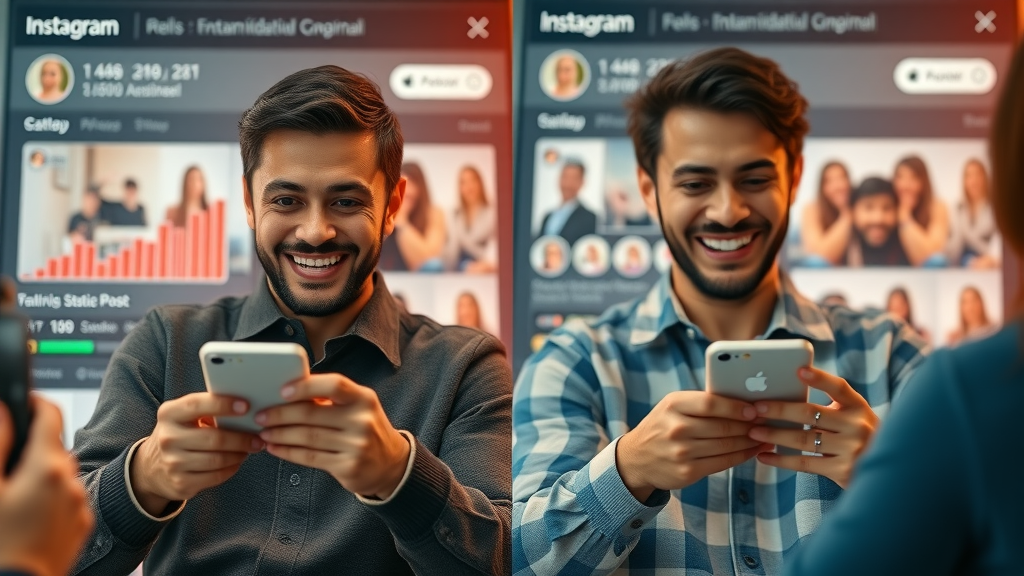
Instagram reels promotion comparison reels vs static posts with users reacting positively

Reels can be up to 90 seconds long, offering ample space to showcase creativity, share value-driven tips, or highlight products—all in a mobile-optimized, full-screen format. The shareability factor is also massive, as users frequently distribute entertaining or informative reels, amplifying the organic reach for accounts aiming to boost their Instagram followers . In summary, reels ads and organic reels both offer unique advantages that static formats can’t match for genuine user acquisition.

How Instagram Reels Promotion Integrates with Social Media Marketing

Your Instagram Reels promotion strategy works best as part of a broader social media marketing campaign. By aligning your reels with ongoing promotions, seasonal campaigns, or influencer partnerships, you can create cohesive multi-channel experiences that guide Instagram users from discovery to conversion. Integrating reels with Stories, feed posts, and IGTV not only amplifies reach but also dissects your message for different audience preferences on the platform.

Furthermore, smart use of reels ads and organic content can funnel traffic to your main website, product launches, or even other media platforms (like YouTube or TikTok) for a well-rounded marketing approach. The true strength of Instagram Reel promotion lies in its ability to ignite and reinforce brand recognition in the fast-paced digital media landscape.

Key Tactics for Instagram Reels Promotion That Deliver Results

  • Optimize your Instagram reel for the algorithm
  • Leverage trending audio and effects on Instagram reels
  • Maximize engagement rate for Instagram user growth

Create Instagram Reels That Capture Your Target Audience

The first step to successful Instagram Reels promotion is crafting videos that instantly connect with your desired followers. Determine your target audience by analyzing competitor content, current trends in your niche, and the preferences of your existing Instagram user base. Use these insights to create reels that solve problems, entertain, or inspire—think quick how-to’s, relatable “day-in-the-life” snippets, challenge content, or unique storytelling. The more tailored your approach, the more likely you are to foster real engagement and conversions.

Content creator recording Instagram reel dynamic energetic dance in studio

Don’t forget to utilize attention-grabbing hooks in the opening seconds, incorporate trending audio, and include clear calls-to-action. This ensures your reel stands out as users scroll, maximizes watch time, and prompts viewers to follow, share, or visit your profile—key factors in the algorithm that dictate which reels get prioritized on the explore page and beyond.

Mastering Instagram Reels Ads for Greater Reach

Paid reels ads are your ticket to scaling reach and acquiring targeted followers at speed. Through Instagram’s ad manager, you can select objectives like brand awareness, conversions, or engagement. Design reels ad creatives that mirror organic content in style but amplify brand messaging with crisp visuals, storytelling, or user-generated content. A/B test different ad copies, video lengths, and visuals to identify what resonates most with your audience.

Reels ads seamlessly appear within users’ feeds, appearing authentic rather than disruptive. These ads are especially effective for launching new products, promoting time-sensitive sales, or driving viewers to a dedicated landing page—making them a must-have in any social media ad mix targeting Instagram user growth.

Utilize Boost Instagram Features for Faster Results

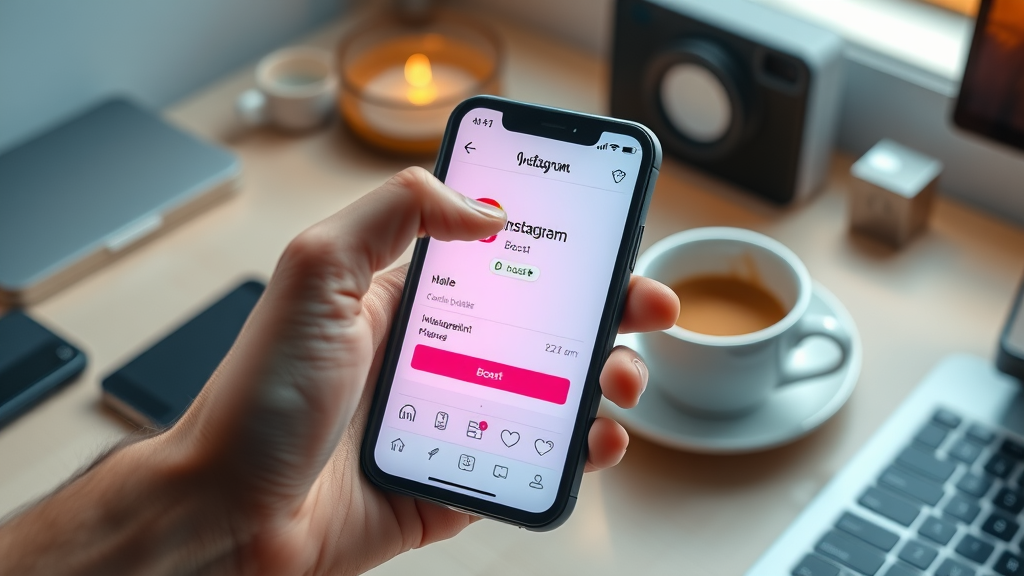
The Boost feature on Instagram reels offers a swift path to amplifying your content. With just a few taps, you can transform a high-performing reel into a sponsored post targeting custom audiences, similar to a quick and powerful paid ad . This is ideal when you notice organic traction and want to escalate momentum without managing a full-scale campaign in Ads Manager.

Boosted reels benefit from increased algorithmic prioritization, appearing more often in the reels tab and on explore pages. Investing even a small amount in boosting a reel can result in rapid spikes in impressions, profile visits, followers—and ultimately conversions. Always analyze boosted reel data post-campaign to refine targeting and creative moving forward.
Marketer

Exploring Instagram Stories vs Instagram Reels in Promotion

  • Highlight differences between Instagram reels and Instagram stories
  • Why reels ad formats outperform stories for follower growth

Instagram Stories and Reels both offer powerful content sharing but serve distinct purposes. Stories are fleeting, 24-hour updates best used for behind-the-scenes, Q&A sessions, or timely announcements. Conversely, Instagram reels are permanent, easily discoverable via the reels tab, and built for viral shareability and long-term reach. When comparing formats, reels drive more significant follower growth due to the algorithm favoring video content that encourages replay and sharing.

Moreover, reels ads outperform stories in terms of engagement rate, as users tend to watch reels longer and interact with them more frequently. Utilizing both formats in conjunction can yield a full-funnel effect—use Stories for day-to-day engagement and exclusive offers, while reserving your highest-quality, trend-following videos for reels and their promotion.

Boost Your Reel: Tips for Getting Featured on the Explore Page

Landing your reel on the explore page unlocks exponential views and follower growth. To boost your reel for max exposure, start by identifying trending topics or challenges within your niche. Use viral audio tracks, jump on fresh effects, and make the first 3 seconds visually compelling. Include relevant hashtags and geo-tags to increase discoverability. Regularly engaging with your audience via comments, shares, or DMs also signals to the Instagram algorithm that your content is worth featuring.

Consistency is another crucial factor. The IG reel accounts that frequently publish high-quality, creative content naturally have more chances for their reels to hit the explore tab. Always analyze which videos make it to the explore page, then double down on what’s working.

"Instagram reels are the most shared content type on the platform. Harnessing this can be a game-changer for brands and creators alike." — Digital Marketing Institute

How to Create Instagram Reels: Step-by-Step Guide to Effective Promotion

  • Script your Instagram reels for clarity and engagement
  • Record with professional lighting and stable shots
  • Edit with Instagram’s built-in tools and trending effects

Content creator scripting and preparing Instagram reel in creative workspace

Create Instagram-Worthy Visuals: Pro Tips for Instagram Reels

Quality visuals are central to Instagram reels promotion success. Use natural light or ring lights for crisp, vibrant video. Stable footage—achieved with a tripod or gimbal—makes your content more watchable and professional. Position yourself or your subject with ample headroom and a clutter-free background, then get creative with angles for dynamic energy. Experiment with Instagram’s filters, AR effects, and overlays to make your videos pop, but avoid overly distracting elements that detract from your message.
High-quality Instagram reel visual collage colorful engagement icons stylish creators

Pro tip: Film in vertical (9:16) format to optimize for the feed and ensure your content fills the screen. Use snappy edits to keep viewers interested, and incorporate branded visuals or logos discreetly for a professional finish without sacrificing authenticity.

Crafting CTAs that Drive Social Media Engagement on Instagram Reels

Every successful instagram reel ends with a compelling call-to-action (CTA). Encourage viewers to like, comment, follow, or share for maximum interaction. Direct questions to the audience (“Which outfit is your favorite?”), invite participation in a challenge, or offer a limited-time giveaway to spark engagement. CTAs bridge the gap between passive viewing and active community building—boosting your performance in Instagram’s algorithm and attracting new followers to your account.

Keep CTAs concise, genuine, and visible both in-caption and on-screen for greater efficacy. Rotating your CTAs—like swapping between “follow for more tips” and “tag a friend”—keeps your engagement strategy fresh and effective.

Harnessing Reels Ad Capabilities Within Instagram’s Ads Manager

For advanced marketers, Instagram Ads Manager unlocks robust capabilities to optimize reel distribution. Through Ads Manager, you can schedule, analyze, and retarget your reels ad campaigns at scale. Target lookalike audiences, refine demographic filters, and manage ad spends with real-time reporting. Customize different objectives depending on campaign goals—conversion, lead generation, website traffic—and utilize split-testing (A/B) to improve performance iteratively.

Unlike basic boosts, full use of Ads Manager means you control placement (Reels tab, Explore, Feed), messaging variations, and creative assets for deeper data-driven decisions. Pair this with regular optimization and you’ll see improved ROI and follower growth from your paid ad campaigns.

Instagram Reels Promotion Metrics: What to Track for Success

  • Key performance indicators for Instagram reels
  • Measuring reach, engagement, and conversions from reels ad campaigns
Comparison: Instagram Reels Promotion Metrics vs Alternative Formats
Metric Instagram Reels Instagram Stories Static Feed Posts
Reach Very High—Explore Page, Reels Tab Moderate—Followers only, limited discoverability Moderate—Followers, limited algorithmic boost
Engagement Rate High—Comments, Shares, Likes Medium—Replies, views Low to Medium—Likes, Comments
Conversion Rate High—Actionable CTAs, link in bio Medium—Swipe Up/Links (for business accounts only) Low—Link in caption/bio

Understanding the Instagram Reels Algorithm and Analytics

The Instagram algorithm prioritizes reels based on watch time, engagement (likes, comments, shares), saves, and use of trending audio. Monitor your insights—especially average watch duration, drop-off points, and follower growth—to tailor future content. Analytics dashboards within Instagram and third-party platforms help you pinpoint what’s working so you can double down on high-performing tactics for ongoing success.

Instagram reels promotion analytics dashboard for performance analyst reviewing data

Consistency in monitoring, reviewing, and adapting is essential for mastering the reels game; small tweaks in content or timing, identified through analytics, can propel a good reel to viral status.

How Social Media Marketing Strategies Affect Instagram Reels Performance

Successful Instagram Reels promotion requires synergy with your broader social media marketing plan. Campaigns supported by email, stories, and feed posts drive users toward your reels, amplifying reach and engagement. Cross-promote by embedding reels in blog posts, newsletters, or even as teasers on TikTok/YouTube Shorts, funneling traffic from multiple media platforms .

Collaborating with influencers, running contests, and aligning reels with trending conversations or holidays transforms your presence from background noise to essential viewing. Regularly updating your content calendar, benchmarking results, and being willing to experiment ensures your reels promotion delivers consistent, compounding follower growth.

"Success with Instagram Reels promotion is data-driven. Regular analysis leads to viral results." — Neil Patel

Instagram Reels Promotion Best Practices & Advanced Tips

  • Post regularly to keep your Instagram user base engaged
  • Test A/B variations for your Instagram reels promotion campaigns
  • Use hashtags and geo-tags for broader reach

Boost Your Reel: Timing and Frequency for Optimal Performance

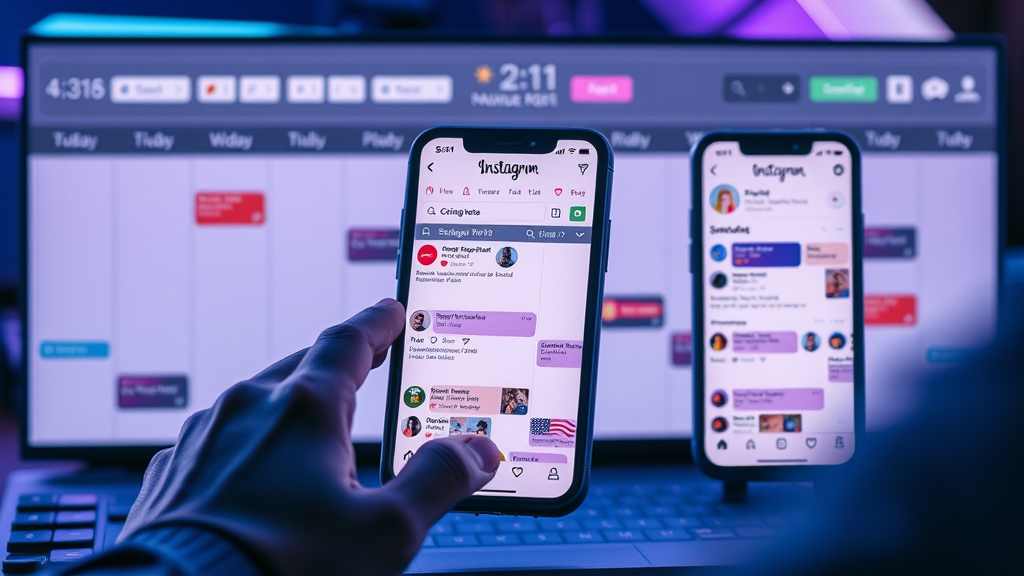
The best-performing IG reels are posted when your audience is most active, usually mornings, evenings, or weekends depending on time zone and demographic. Use Instagram Insights to validate peak times. Posting frequency matters: aim for 3–5 reels per week to keep your content fresh in users’ feeds while gathering enough data for meaningful analytics.
Scheduling calendar for Instagram reels promotion in digital workspace

Pro tip: Batch create and schedule content ahead of time for consistency. Adjust frequency based on engagement metrics—if more frequent posts lead to increased unfollows, dial back; if engagement soars, keep the momentum going. The key is to post when your community is online and craving new content.

Using Influencers and Social Media Partnerships to Enhance Instagram Reels Promotion

Influencer collaborations supercharge Instagram Reels promotion . By partnering with relevant creators, you tap into their established audiences, driving trust and cross-pollination of followers. Joint reels, account takeovers, or co-branded challenges result in authentic content that feels native rather than purely promotional. Choose influencers whose followers match your target customers for maximum impact.

Group of diverse influencers collaborating on Instagram reels in a trendy office setting

Don’t overlook micro-influencers—they often achieve higher engagement rates and cost less than big names. Partnerships can also extend to other brands for mutually beneficial promo pushes. Document and analyze the ROI from these collaborations to refine future campaigns.

Pro Tip: Repurposing Content Across Instagram Reels, Stories, and Feed

To maximize content ROI, repurpose high-performing reel videos into Stories, feed posts, and highlights. Trim or adapt snippets for Stories, include teasers on your main feed, and archive successful reels in Highlights for continuous discovery. This increases the shelf life of your best content and introduces it to users who may have missed the original posting.

Use a mix of media marketing strategies, recycling old footage or themes with updated audio, overlays, or messages to keep your feed dynamic and cohesive without added workload. Cross-format content also signals to the algorithm that your reels are important, boosting their overall performance further.

Advertising Essentials: Running an Effective Reels Ad Campaign

Designing High-Converting Reels Ads for Target Audience Segments

Design reels ads with laser focus on your target audience . Start with clear value propositions, strong opening imagery, and tight branding. Incorporate captions for silent viewing and clear CTAs throughout. Show products in action, share quick bites of advice, or leverage testimonials for instant credibility. Remember: your audience should instantly recognize the benefit to them within the first 3 seconds of the video.

Utilize relatable scenarios, emotional storytelling, and quick transitions in your reels ad to increase retention and conversion rates. Test various creative angles and adapt them per segment—what appeals to Gen Z gamers may differ from millennial entrepreneurs. Data from your ads manager will quickly reveal which approaches drive the most engagement and ROI.

A Step-by-Step Guide to Instagram Ads Manager for Reels Promotion

  • How to set budget and duration for Instagram reels ads
  • Measuring ROI from your reels ad efforts
  • Refining targeting for Instagram user acquisition

To launch a reels ad , head to Instagram Ads Manager and choose the “Reels” placement. Set your campaign objective (e.g., reach, conversions, engagement), then define your daily budget and campaign duration. Leverage detailed targeting options—location, interests, behaviors, and lookalike audiences—for precise user acquisition. Upload your creative, preview placements (Explore, Feed, Reels tab), and monitor performance in real time.

Ad Spend vs Engagement: What Successful Instagram Reel Ads Look Like
Budget Expected Reach Engagement Rate Follower Growth
$5/day 5,000–10,000 views 5–10% 20–50 new followers
$20/day 25,000–50,000 views 10–15% 100–200 new followers
$100/day 100,000–200,000 views 15–18% 500+ new followers

Constantly review analytics (cost per result, engagement, follower increase) to refine your targeting and creative assets. Over time, you’ll discover your optimal spend-to-engagement ratio for maximum ROI.

Do’s & Don’ts for Reels Ads—Maximize Your Media Marketing Dollars

Do: Use branded, vertical video assets; tailor each reel ad to a clear objective; refresh creative every two weeks; monitor and optimize spend. Don’t: Use horizontal or cropped videos; oversaturate with text; ignore negative feedback; run campaigns without setting clear metrics for success. Keeping your media marketing strategy agile ensures you’re investing in winning concepts without overspending.

Understanding Reels Ads Policy and Compliance

Stay up to date on Instagram’s ad policy to avoid account issues. Use licensed music/sounds, avoid prohibited products/services, and ensure disclosures for sponsored content or brand partnerships. Adhere to Instagram’s creative and technical specifications for reel video ads (vertical format, max file size, duration). Instagram regularly updates these policies—so review the latest guidelines before launching new campaigns to maintain compliance and keep your Instagram account in good standing.

"Brands that consistently advertise with reels ads see 30% higher conversion rates than those using only static content." — Sprout Social

Instagram Reels Promotion vs Other Social Media Platforms

  • Pros and cons of Instagram reels promotion
  • Comparing Instagram reels to TikTok, YouTube Shorts, and Facebook
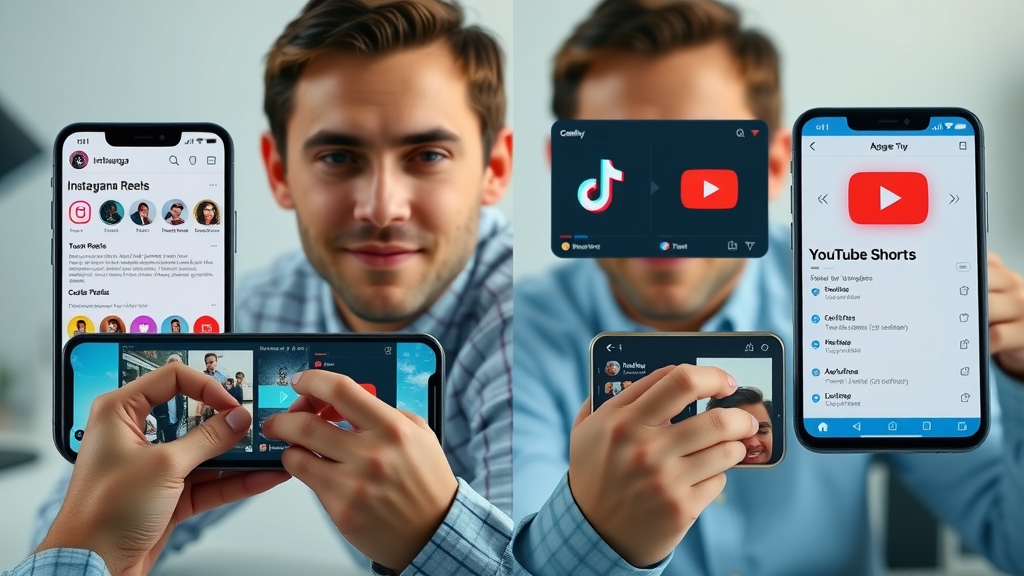
Comparison Instagram reels vs TikTok, YouTube Shorts, Facebook interfaces and engagement metrics

While Instagram reels stand out for their discovery capabilities and integration within a mature social commerce platform, TikTok excels at viral reach for Gen Z, while YouTube Shorts provides longer shelf life and deeper analytics. Facebook reels offer cross-posting advantages but lag in organic reach compared to Instagram. Each platform has unique algorithmic quirks, audience segments, and content preferences—so diversify for maximum reach.

Instagram’s robust paid ad solutions, rich creator ecosystem, and seamless shopping integration make it a preferred choice for brands seeking scalable, conversion-focused campaigns. However, creatives should experiment across platforms to identify which yields the best ROI based on their specific target audience and campaign objectives.

Leveraging Cross-Platform Social Media Marketing

Smart brands reuse top-performing reels across TikTok, YouTube Shorts, and Facebook to maximize visibility and insights. Track which edits and topics perform best on each media platform and cross-promote through consistent branding, unique hashtags, and tailored CTAs. Use Instagram as the anchor for community building while letting other networks serve as discovery and traffic drivers back to your main hub or shop.

Adoption of new formats (like YouTube Shorts or TikTok Stories) allows marketers to reach incremental audiences while extending the value of every production cycle—making your social media marketing approach more robust and future-proof.

Integrating Instagram Reels Promotion into a Broader Digital Marketing Campaign

For explosive results, map your Instagram Reels promotion to broader digital campaigns like product launches, influencer takeovers, or limited-time events. Coordinate paid social media ads, PR pushes, and cross-channel newsletters so that every touchpoint amplifies the momentum of your reels content. Regularly evaluate reporting dashboards to balance organic vs paid efforts, diversify creative approaches, and retune strategy for seasonality or trends.

Deploy consistent storytelling across all digital assets—website, email, other social networks—to reinforce brand recognition and increase the compounding effect of integrated digital marketing.

Expert Insights: Future-Proofing Your Instagram Reels Promotion Strategy

  • Predicted trends for Instagram reels
  • Adapting to new features and algorithm changes
  • Staying compliant with updated Instagram policies
"The future of Instagram reels promotion will belong to brands who innovate with short-form video and value-driven content." — Gary Vaynerchuk

Short-form video will only grow in importance, with advanced AR features, interactive ads, and richer analytics rolling out regularly. Remain agile by testing new features within the reels tab, participating in early beta programs, and adapting to algorithm shifts. Ongoing compliance—especially around music rights, advertising regulations, and sponsored content disclosure—remains critical. Prioritizing authenticity, creativity, and agility will future-proof your reels promotion as social media continues to evolve.

People Also Ask

Can you promote Instagram reels?

Yes, Instagram enables users and brands to promote their reels with ad spend directly from the app or via Ads Manager, helping reach a wider, targeted audience.

Is it worth boosting reels on Instagram?

Boosting Instagram reels is highly worthwhile for brands seeking rapid follower growth, engagement, and increased discoverability on the explore page.

How much does it cost to promote a reel on Instagram?

Promotion cost depends on targeting and competition, but Instagram reels ads generally begin at $1/day, scaling with budget and audience scope.

How to get 1000 views on Instagram reel?

Optimize your Instagram reel for trends, post at peak times, use relevant hashtags, and consider initial ad spend to quickly spark views and engagement.

Frequently Asked Questions about Instagram Reels Promotion

  • Can reels go viral without promotion? Yes, high-quality and timely reels can go viral organically, especially when leveraging trending audio and active engagement. However, promotion accelerates and amplifies this potential.
  • What’s the best time to post Instagram reels? Post during peak hours for your target audience; use Instagram Insights to identify when your followers are most active, typically mornings, evenings, and weekends.
  • How long should an effective Instagram reel promotion last? Run promotions for at least 3–7 days to maximize reach and allow the algorithm to optimize delivery for optimal results.

Summary: Key Takeaways for Instagram Reels Promotion Success

  1. Instagram reels promotion is essential for follower growth
  2. Ads manager unlocks scalable reach for your content
  3. Embrace creative trends for standout Instagram reels
  4. Track analytics and adapt your strategy for ongoing improvement

Social media marketer celebrating Instagram reels promotion success and rising engagement

Ready to Elevate Your Brand? Boost Your Instagram Reels Promotion Today!

  • Start your first Instagram reels promotion campaign now
  • Experiment with reels ads to uncover your best performing content
  • Engage with your target audience to build a loyal following
  • Stay updated on Instagram features and insights for continuous growth

Media Sites Hub

Write A Comment

*
*
Related Posts All Posts
11.08.2025

What Is a Media Site and Why Your Business Needs One Right Now

Did you know that a staggering 82% of global internet traffic now comes from video streaming and downloads? This eye-opening statistic underscores the seismic shift in how people consume information online and demonstrates just how important it is for businesses to operate a robust media site—especially if they aim to lead their industry. In today’s digitally powered world, harnessing the advantages of video learning, live event streaming, and interactive video presentations through a modern video platform can transform your business’s online presence. In this article, you’ll discover why a media site is no longer optional—it’s urgent for companies looking to capture attention, build authority, and drive real engagement. Unveiling the Power of Media Sites: The New Frontier for Business Growth "A staggering 82% of global internet traffic now comes from video streaming and downloads—demonstrating the critical impact of powerful media sites for brands that want to lead their industries." Dynamic, media-rich interfaces set modern media sites apart by integrating video platform features and interactive content. Centralized management of live event, video learning, and lecture capture transforms business communications into engaging audience experiences. Real-time analytics, video presentation tools, and robust mediasite account controls give businesses a competitive edge over static, classic websites. Media sites offer a level of rich media engagement that goes beyond traditional web pages. By layering in live event streaming, comprehensive mediasite video presentations, and advanced lecture capture capabilities, companies can strengthen their authority, capture detailed analytics, and optimize both customer engagement and search engine performance. As a business, embracing the new era of media-centric online experiences positions your brand as a technology innovator—ready to meet evolving consumer preferences and the rising demand for personalized video content. Let’s explore the components of a media site and why it’s crucial to your business success. What You'll Learn by Reading About Media Sites A clear media site definition and its core components How a media site differs from a traditional website The strategic advantages for businesses adopting a media site Insights on video platform integration and mediasite video solutions for engaging content delivery By the end of this guide, you’ll have practical steps to take your business’s digital experience from static to stellar – with tools, platforms, and practices tailored for peak engagement, effortless management, and future-proof results. Media Site Explained: Definition, Features, and Examples What is a media site? A media site is an advanced online platform built to host and manage high volumes of interactive, multimedia content—primarily focusing on video learning, live event streaming, and video presentations. Unlike traditional static websites, media sites offer a dynamic, user-centric interface featuring content delivery networks (CDNs), comprehensive mediasite player integration, and robust video management capabilities. At its core, a media site acts as a digital hub, empowering faculty and staff, corporate teams, or public audiences to create, distribute, and engage with rich media content for teaching and learning, marketing, training, and communication purposes. Today, businesses turning to video platform solutions like Mediasite Video or Mediaite are experiencing exponential growth in reach and retention. The result? A digital presence that captivates users and outpaces competitors still reliant on static web design. Empowered by advanced features like desktop recorder integration, live streaming, and mediasite account controls, a modern media site transforms content into immersive experiences, ensuring that audiences—whether medical students, learning professionals, or prospective customers—stay engaged and informed. With the rise of sites such as Ohio State’s lecture capture system, the value of a well-designed, robustly managed media site has never been more apparent for any ambitious organization. Media Site vs. Traditional Website: Key Distinctions While both media sites and traditional websites provide information online, the distinction lies in the depth and quality of content engagement. Media-rich interfaces and powerful video platform capabilities define a media site. These platforms leverage tools like the mediasite desktop, mediasite desktop recorder, and enhanced presentation management, which enable staff to record high-quality video presentations and facilitate instant sharing across global networks. Media-rich interface and video platform capabilities: Media sites support interactive video learning, providing features like advanced search, real-time comments, and in-video quizzes that boost knowledge retention and user participation. Content delivery networks for video learning: By deploying CDNs, media sites ensure high-definition, buffer-free playback of live events and recorded lectures, enhancing the learning experience. Mediasite account and presentation management: With detailed analytics, content scheduling, and user management, businesses can deliver content efficiently and measure ROI accurately. A classic website, by comparison, may lack these seamless video integrations and is often limited to static pages and basic multimedia galleries. The result is a less engaging experience with fewer opportunities for real-time audience interaction or comprehensive analytics. Comparison Table: Media Site vs. Regular Business Website Feature Media Site Business Website Content Type Live event streaming, video learning, interactive presentations, lecture capture Static text, images, basic videos User Engagement Comments, quizzes, media playlists, analytics Contact forms, blog comments Platform Integration Mediasite video, content delivery networks, desktop recorder Basic CMS, limited multimedia tools Use Cases Corporate training, university lecture capture, event streaming, product launches Company information, marketing, lead generation Analytics Detailed user and content analytics, performance insights Website visits, page views Notable Media Site Examples Several pioneering media sites have set the standard for what rich, video-centric digital hubs can accomplish. Mediaite: Known for its real-time, video-rich news coverage platform, Mediaite combines powerful video platform features with up-to-date reporting to engage users. As a preferred solution for businesses and higher education, Mediasite delivers expert-level mediasite video, live event streaming, and robust lecture capture technologies. Ohio State University (OSU): Their specialized educational media site, featuring mediasite desktop recorder and video presentation management, has revolutionized teaching and learning for thousands of medical students and faculty. These platforms demonstrate how targeted investments in live event streaming and video learning work together to elevate the customer or student experience while increasing brand authority through innovative technology. How Media Sites Supercharge Content Strategy and Drive Engagement Boosting brand authority through consistent video learning content Improving customer engagement and SEO with mediasite presentations and video platform integration Facilitating live event streaming and on-demand mediasite presentation access By integrating advanced mediasite presentations, businesses position themselves as industry leaders. Using a video platform like Mediasite or Mediaite, organizations can deliver branded, interactive content directly to their audiences—offering not just information, but memorable experiences. Successful media sites drive greater engagement and customer loyalty by making it easy to access live event streams, on-demand video presentations, and course-based video learning. As SEO increasingly rewards original video content and user engagement metrics, media sites that harness analytics, presentation tools, and flexible mediasite account controls see superior results in both ranking and conversion rates. "A media site isn’t just a repository for content—it’s your business’s digital stage and audience magnet." Mediasite Video Platform: A Game-Changer for Business Communications Core Features of a Leading Video Platform Robust mediasite desktop recorder: Enables easy capture of high-quality video presentations directly from the desktop, supporting real-time content creation without complex setup. Mediasite desktop integration: Ensures seamless publishing of videos, PowerPoint slides, and audio for comprehensive knowledge sharing. Automated video presentation management: Streamlines storage, distribution, and archiving via the mediasite account portal, reducing administrative overhead for staff and faculty. Live streaming and on-demand video learning support: Provides enterprise-scale tools to deliver video lectures or corporate events globally. These features empower medical students, faculty and staff, and business professionals to consistently deliver impactful teaching and learning experiences. The mediasite desktop recorder is particularly valued for its simplicity, enabling presentations without leaving the desktop environment and facilitating effective video content creation by non-technical users. Why Businesses Choose Mediasite Video Solutions Secure mediasite account access and administrative controls: Ensures only authorized staff to record or manage confidential mediasite content, protecting proprietary data and intellectual property. Seamless analytics for mediasite presentations: Organizations harness detailed analytics to measure viewer engagement, assess learning outcomes, and refine future content strategies. Trusted by leading institutions: Organizations like Ohio State rely on Mediasite’s lecture capture and content delivery networks to meet demanding educational and business needs. Mediasite video solutions deliver scalable, future-proof technology that grows with your organization’s needs. Their reputation for reliability, security, and ease of use makes them an ideal choice for businesses looking to enable secure, impactful, and data-driven video learning or corporate communications. Setting Up Your Media Site: Key Steps and Best Practices Initial Planning: Define Your Audience and Goals Establish business needs for a video platform Determine content mix: live events, video presentations, mediasite presentations, etc. Start by clearly defining your target audience—whether that’s customers, employees, medical students, or teaching and learning professionals. Identify the specific goals your media site should achieve: Is it employee onboarding, product demonstration, or formal video lectures? Mapping out a strategic content plan around your unique objectives ensures that your media site delivers measurable value from day one. From live event streaming to on-demand video presentations, planning lets you choose the right mix of interactive and evergreen content. Technical Considerations: Platform, Hosting, and Security Choosing between a proprietary mediasite video solution and open-source video platforms Security considerations for mediasite account management Optimizing for scalable video learning and lecture capture demands Carefully select a platform with the scalability, security, and workflow features needed to meet your business’s current and future needs. Proprietary solutions like Mediasite Video typically offer superior mediasite support, robust site server controls, and seamless mediasite account management. They handle everything—from live event streaming and user authentication to compliance and analytics. Companies with skilled IT resources might also consider open-source platforms that can be customized but will require additional ongoing maintenance, including mediasite server and security configuration. Security is paramount. Ensure your platform provides strong access control, encrypted data transfer, and continuous monitoring—especially if you are recording sensitive video presentations or managing proprietary educational technology. By making these decisions early, you safeguard both your brand and audience. Content Workflow: Desktop Recorder and Presentation Tools Best practices for using mediasite desktop and mediasite desktop recorder Integrating with desktop recorder tools for easy capture and publishing Leveraging a user-friendly desktop recorder like mediasite desktop recorder allows content creators to record, edit, and publish presentations without leaving their desks. Whether sharing PowerPoint slides or producing instructional videos, these tools help streamline the workflow while ensuring consistency and quality across all uploads. Integrating your site with the right tools enables faculty and staff or business teams to focus more on content than technical details. Case Studies: How Media Sites Elevate Businesses Success Story: Ohio State’s Lecture Capture Transformation Ohio State University revolutionized teaching and learning by implementing a comprehensive media site driven by Mediasite Video. Faculty and staff now record, manage, and share thousands of mediasite presentations and video lectures every semester. This seamless system has empowered medical students and instructors alike, providing instant access to high-definition recordings, interactive content, and detailed analytics on user engagement. By centralizing content delivery through a robust site server and content delivery network, Ohio State set a new benchmark for educational technology in higher education. Corporate Innovation: Video Platform Adoption in Modern Enterprises Brand reach expansion: Streaming live product launches and corporate events globally through a dedicated media site brings authenticity and excitement to marketing campaigns. Onboarding and internal communications: Modern enterprises use video presentation platforms for HR training, onboarding, and CEO announcements—ensuring that all team members, regardless of location, receive consistent, engaging content. By embedding mediasite desktop recorders into their workflow, companies empower staff to record informative presentations quickly and securely. The result is improved knowledge transfer, reduced training costs, and an agile approach to both internal and external communications—all tracked by detailed analytics available within the mediasite account system. FAQ: Everything About Media Sites and Video Platforms What is a media site? What kind of site is Mediaite? What is the most popular media site? Who owns Mediasite? What is a media site? A media site is a specialized online platform designed to host, manage, and deliver dynamic, media-rich content—especially videos, live events, and interactive presentations. Unlike traditional business websites, a media site centers on video learning, lecture capture, and comprehensive audience engagement using advanced video platforms and powerful analytics. What kind of site is Mediaite? Mediaite is a digital news and opinion platform focused on video-driven media coverage. It delivers industry news, commentary, and real-time video content, serving as a media site example that leverages video platform integration for high user engagement and dynamic reporting experiences. What is the most popular media site? While numerous media sites attract millions of users, YouTube remains the most popular worldwide—setting the standard in video content delivery, live event streaming, and user-generated media. Other notable names include Mediasite for education and enterprise, and Mediaite for news. Who owns Mediasite? Mediasite is owned by Sonic Foundry—a leading global provider of video platform technology, delivering solutions for lecture capture, corporate communications, and online learning to organizations around the world. People Also Ask: Popular Questions About Media Sites What is a media site? A media site is a website that focuses on distributing rich media content, with an emphasis on video platform features, live event streaming, and interactive video presentations. It supports video learning and audience participation far beyond traditional text-based sites. What kind of site is Mediaite? Mediaite is a media news platform that uses dynamic videos and editorial content to inform and engage its audience, exemplifying how media sites transform user experience with live and on-demand video integration. What is the most popular media site? YouTube is widely considered the most popular media site globally, offering unmatched reach, advanced video platform infrastructure, and extensive video learning resources. For specialized fields, platforms like Mediasite and Mediaite stand out in education and news, respectively. Who owns Mediasite? Mediasite is developed and owned by Sonic Foundry, a global leader in video capture and content delivery technologies trusted by universities, corporations, and public sector organizations. Key Takeaways: Maximizing Business Value with a Media Site A media site provides an unrivaled competitive edge through video learning, live event streaming, and immersive content delivery. Choosing a robust video platform like Mediasite Video streamlines both content management and analytics. Start by clear goal-setting and audience analysis, incorporate desktop recorders for efficient content creation, and secure your mediasite account for maximum data safety. Investing in a tailored media site is one of the most strategic moves a business can make to adapt, innovate, and thrive in the experience-driven digital era. Ready to Launch Your Own Powerful Media Hub? Transform your content strategy, boost your authority, and captivate your audience with a tailored media site hub. Let’s chat today—I’ll walk you through exactly how a customized media hub can elevate your brand and supercharge your business growth! 👉 Message me now for your personalized walkthrough!

06.16.2025

Online Advertising for Small Businesses: Save Money Now

Did you know that more than 70% of small businesses that invest in targeted online advertising see measurable ROI in the first six months? If you're a business owner searching for ways to promote your products or services online—and do it on a tight budget—this guide will show you how online advertising for small businesses can deliver fast and lasting results. Get ready to unlock cost-saving opportunities, reach your ideal customers, and take your business online growth to the next level! Why online advertising for small businesses is more important than ever How to choose the right advertising platform for your business Tried-and-true strategies to maximize your ad spend and ROI Tips for crafting compelling ads that convert Real-world success stories and actionable checklists Unlocking the Power of Online Advertising for Small Businesses: Surprising Facts That Could Save You Thousands Did you know over 70% of small businesses investing in targeted online advertising see measurable ROI in the first six months? Discover how embracing online advertising for small businesses can deliver instant cost-savings and boost your growth potential. Online advertising for small businesses has become a game-changer, offering unprecedented opportunities to reach your target audience and promote your business efficiently. Unlike traditional advertising, online platforms such as Google Ads and Facebook Ads allow even local businesses or startups to precisely target customers, measure results in real-time, and adjust ad campaigns for optimal performance. With the right strategy, you can maximize every dollar of ad spend, outpace competitors, and attract new clients to your products or services—no matter your budget size. Embracing digital marketing not only saves money but also provides agility. You can pivot your advertising method, refine ad copy, and optimize targeting as you collect performance data. For small businesses seeking to advertise your business online, this means less guesswork, lower risk, and a faster path to high-impact results. Investing in the right online advertising campaign today is one of the smartest moves a small business can make—helping you nurture brand awareness, boost website traffic, and convert online leads into paying customers. Why Online Advertising for Small Businesses Matters More Than Ever The evolving digital landscape and consumer expectations: practical reasons for prioritizing online advertising for small businesses How online advertising levels the playing field with larger competitors Key business benefits: reach, targeting, flexibility, and ROI Today’s consumers spend more time than ever researching products and connecting with brands via the internet. From search engines to social media, the digital landscape is changing rapidly—and small businesses must keep pace. Online advertising for small businesses enables you to meet customers where they already are: online. Prioritizing online ad campaigns ensures you're not left behind as competitors invest heavily in digital marketing to expand their reach and influence buying decisions. The biggest advantage? Online advertising levels the playing field , allowing small businesses to compete directly against larger companies. While a national brand may have a bigger ad spend, you can still capture your ideal audience by leveraging local targeting, niche interests, and personalized content. Targeted online advertising platforms—like Google Ads and Facebook Ads—provide advanced segmentation tools so small businesses can reach potential customers based on location, interests, online behavior, and more, at a fraction of the cost of traditional media. Other core benefits include exceptional flexibility and trackable ROI. Launching, pausing, or adjusting campaigns is instantaneous. Every click and conversion is recorded, offering direct feedback on your advertising method’s performance. This means you can invest confidently, knowing your money is being used effectively to drive real results for your business online. Assessing Online Advertising Platforms for Small Businesses: Choosing the Best Options Comparing Google Ads, social media platforms, and niche advertising platforms Evaluating the benefits and drawbacks of each major advertising platform Table: Platform Features, Costs, and Audience Targeting Capabilities The sheer number of online advertising platforms can be overwhelming for small business owners. The most popular choices include Google Ads , Facebook Ads , Instagram Ads , and specialized niche networks. Each advertising platform offers unique features, audience targeting, and ad formats, so it’s essential to evaluate which option best fits your business goals, your target audience, and your budget. Google Ads lets you appear at the top of search results when potential customers are looking for products or services like yours. If you want to capture high-intent leads, this platform is ideal. Social media advertising , through Facebook or Instagram, is perfect for brand awareness, retargeting, and engaging users based on their interests, behaviors, and social connections. Industry-specific ad networks or directories can also be effective, especially for local businesses or B2B companies targeting niche markets. Balancing cost, reach, and control is key. While Google Ads often delivers fast, measurable results for search intent, Facebook and Instagram excel at storytelling and building long-term relationships. Evaluate your options by considering where your audience spends their time, your desired outcome (leads, sales, awareness), and how much oversight you want over every aspect of your campaign. Online Advertising Platform Comparison for Small Business Success Platform Name Monthly Cost Key Features Best For Sample Use Case Google Ads $100–$1,500 Search intent targeting, PPC, location-based ads Lead generation, local businesses, e-commerce Appear in local search results for "coffee shop near me" Facebook Ads $50–$1,000 Interest/demographic targeting, visual creatives, retargeting Brand awareness, retail, community engagement Promote grand opening with targeted local event ads Instagram Ads $50–$800 Visual storytelling, influencer partnerships, shoppable posts Retail, food, lifestyle brands Showcase new product line with carousel ads LinkedIn Ads $200–$2,000 B2B targeting, job ads, industry groups Professional services, B2B, recruiters Attract business clients in your niche Niche Networks $50–$500 Industry-specific targeting, reputation building Local services, professional specialists Ad on local business directory for wedding vendors Proven Online Advertising Strategies for Small Businesses on a Budget Creating effective online ad campaigns: step-by-step guide Maximizing ROI with cost-effective ad spend strategies Utilizing Google Ads and Facebook Ads for targeted reach Tips for monitoring, adjusting, and optimizing ad campaigns in real time To get the most bang for your buck, focus on efficient online ad campaign structures. Begin with clear goals—whether it’s website visits, foot traffic, or sales. Use Google Ads for high-intent keyword targets and Facebook Ads for reaching custom audiences based on interests and demographics. Start with a modest ad spend, monitor your campaigns daily, and let live data guide your decisions as you scale your budget up for winning creatives or pause underperforming segments. For boosted ROI, segment your target audience precisely and craft personalized ad messages that resonate with their needs. Use location targeting to ensure you only pay for exposure in areas you serve. Consider remarketing to previous website visitors—this typically yields lower costs and higher conversion rates. Keep testing headlines, images, copy, and calls to action. Simple tweaks can boost click-through rates and lower cost per acquisition, allowing your budget to stretch further. Don’t forget to track conversions through analytics dashboards and integrate UTM codes into your ad links. This strategy not only helps measure exact returns on ad spend but also identifies which platforms, ads, and keywords are moving the needle for your business online. For small businesses, continuous optimization is the secret to long-term savings and sustainable growth from online advertising. Crafting Compelling Online Ads: Secrets to Attracting Potential Customers The anatomy of a high-converting online ad for small businesses Copywriting techniques for engaging potential customers and driving clicks Visual elements: how to create eye-catching graphics for social media and search engine ads A successful online ad campaign starts with compelling creative. The anatomy of a high-converting online ad for small businesses includes a powerful headline, a clear call-to-action, persuasive copy, and eye-catching visuals. Focus your message on solving a customer pain point or showcasing a unique benefit—be specific about products or services, special offers, or what makes your brand different. Use language that speaks directly to your target audience, encouraging immediate action (“Shop Now,” “Book a Free Demo,” “Get Your Discount”). Copywriting for online advertising is both art and science. Keep your ad copy concise but impactful: use strong verbs, active voice, and a conversational style. Address your potential customer’s motivations and leverage urgency or exclusivity where appropriate (“Limited Time Offer,” “Only 10 Spots Left”). For local businesses, highlight community involvement or local roots to build rapport with nearby clients. Remember, personalized ads consistently outperform generic content, so segment your messaging for different demographics or buyer personas. Visuals matter more than ever on social media and search engines. Use high-quality images with vibrant colors, natural settings (especially with people), and clear representation of your product or service. If you’re promoting on Facebook or Instagram, test video ads or GIFs for increased engagement. Experiment with formats: carousel ads, story ads, and short video snippets can each attract attention in the feed and drive more clicks. Always ensure your branding is clear but not overwhelming, and stay consistent with your overall visual identity. How Small Businesses Can Use Google Ads to Drive Online Success Setting up your first Google Ads campaign: practical walkthrough Best practices for keyword research, targeting, and ad budget allocation Mistakes small businesses should avoid with Google Ads Case study: small business success stories with Google Ads “Online advertising for small businesses is not just about being seen, but about being found by the right audience at the right time.” – Digital Marketing Expert Getting started with Google Ads doesn’t have to be intimidating for small business owners. Start by identifying keywords that reflect your products and services and match what your potential customers are searching for on Google. Use the Google Keyword Planner to uncover high-traffic, low-competition search phrases, and group related keywords into specific ad groups. Set a manageable daily budget—Google’s flexible model lets you adjust ad spend at any time—and focus on campaign settings that restrict ads to your service area for maximum efficiency. Follow best practices for ad targeting: use negative keywords to filter out irrelevant traffic, consider scheduling ads during peak business hours, and set up conversion tracking to measure real results. Allocate more budget to high-performing ad groups and pause those that aren’t converting. Common mistakes to avoid include bidding on overly broad keywords, neglecting mobile optimization, and letting campaigns run unchecked without analysis. Regularly review reporting dashboards to tweak ad copy, bids, and targeting settings for better ROI. Many small businesses have achieved impressive growth by advertising through Google Ads. For example, a local beauty salon used tightly focused search campaigns to reach nearby residents searching for “haircut in [town].” As a result, the salon filled open appointment slots, increased bookings by 35%, and built ongoing client relationships. Taking time to refine your Google Business profile, adjust your targeting, and learn from ongoing data turns Google Ads into a high-value channel for sustained business online success. Leveraging Social Media Advertising for Small Business Growth Choosing between Facebook Ads, Instagram, and other leading social media Targeting your ideal customer: interests, demographics, and behaviors Sample ad creatives and campaign objectives to try Managing your paid advertising spend for maximum impact Social media is a cost-effective advertising platform for small businesses, offering advanced targeting options and impressive reach. Choosing between Facebook Ads, Instagram Ads, or even LinkedIn should depend on your business type and where your audience spends time. Facebook excels for local retail, events, and broad community engagement, while Instagram works well for visual brands and products aimed at younger, trend-focused consumers. LinkedIn is ideal for B2B services and professional networking. To target your ideal customer on social media, define key interests, demographics (age, gender, location), and specific behaviors (such as recent purchases or interactions with your brand online). Each platform provides robust audience insights and lookalike targeting to help you find potential customers similar to your best existing clients. Try a variety of ad creatives: carousel product showcase, behind-the-scenes brand videos, or user-generated testimonials. For campaign objectives, choose between awareness, website traffic, lead generation, or sales—then monitor results to shift priorities as you learn. Paid advertising on social media allows daily ad spend adjustments. Start with a modest budget, then scale up the ads that generate the lowest costs-per-conversion. Employ analytics tools to see which campaigns yield the most engagement or sales. Over time, you’ll develop best practices for your own business and find the perfect paid advertising mix for your unique goals and audience. Measuring Performance: How to Track ROI on Online Advertising for Small Businesses Setting clear campaign goals and key performance indicators (KPIs) Tools to track conversions, traffic, and customer acquisition Using analytics insights to refine your online advertising approach To maximize your online ad spend, establish crystal-clear goals for every advertising campaign. Common KPIs include website visits, lead form completions, phone calls, and direct sales. Knowing exactly what you want to achieve ensures your campaigns are focused and your marketing dollars are spent intentionally. For local businesses, tracking increases in foot traffic, appointment bookings, or inquiries can also be valuable. Next, set up robust tracking tools: Google Analytics, Facebook Pixel, and built-in platform analytics will show you how many users interact with your ads and which ads convert best. Monitor conversion rates, click-throughs, and acquisition costs to spot trends and spot underperforming efforts. Analyze search engine queries, social sharing, and referral traffic to understand where your potential customers are coming from and what prompts them to act. Use this data to optimize your online advertising approach. Adjust your ad creative, modify bidding strategies, and reallocate budget from less effective campaigns to high performers. An always-on optimization mindset will ensure every dollar you invest in advertising yields maximum returns for your small business. Dos and Don’ts: Common Online Advertising Mistakes for Small Businesses Overcoming budget pitfalls and poor ad targeting Avoiding generic content—why personalized ads win Leveraging data to prevent wasteful ad spend Many small businesses lose money in online advertising by spreading their ad spend too thin or using the wrong targeting settings. To avoid these pitfalls, start by defining a specific target audience and focusing on platforms where they spend time. Don’t set-and-forget campaigns—review campaign data at least weekly, testing new audiences, creative angles, and offers to continually improve results. Generic ads rarely perform well. Instead, personalize your advertising campaigns for different customer segments. Utilize data from your website, social media platform insights, and customer feedback to create ads that speak to individual needs. For example, a local gym might use Facebook Ads to deliver custom messages to busy professionals looking for after-work classes, while offering another ad set for parents interested in family fitness programs. Data-driven targeting prevents wasteful ad spend and boosts overall ROI. Leverage analytics dashboards and insights from all advertising platforms to make granular adjustments—whether it’s refining ad copy, pausing ineffective keywords, or trying new ad formats. The businesses that succeed are those that treat online advertising as an evolving process requiring regular review, innovation, and adaptation. Expert Insights: Future Trends in Online Advertising for Small Businesses Emerging platforms and technologies on the horizon AI and automation for small business online advertising Privacy changes and adapting your ad strategy As the digital marketing world evolves, emerging platforms like TikTok, Pinterest, and YouTube Shorts are becoming increasingly valuable for small businesses looking to connect with younger audiences. Video content and engaging short-form media are drawing new users and creating innovative ways to advertise your business online. Keeping a pulse on these platforms empowers savvy business owners to stay ahead of industry shifts. Artificial intelligence and automation are also reshaping the online advertising landscape. Smart ad bidding algorithms, responsive ad creatives, and automated reporting simplify campaign management for small teams and help create more effective advertising strategies. Leveraging AI tools within Google Ads and Facebook Ads, for example, can optimize ad placement, target the right audiences, and allocate ad spend for maximum return—often with less manual effort. Data privacy continues to influence advertising methods. With gradual changes such as the phase-out of third-party cookies and new user privacy frameworks, small businesses should focus on collecting first-party data and building strong direct relationships with customers. Make your ad content more relevant, seek explicit consent for tracking, and prepare to adapt your campaigns as privacy regulations evolve—ensuring compliance while maintaining your marketing edge. Stories of Small Businesses That Transformed Their Growth with Online Advertising Mini-case studies: how online advertising for small businesses saved money and boosted revenue Lessons learned: actionable takeaways for your own strategy Consider the story of a local bakery. After struggling with low foot traffic, the owner launched a targeted Facebook Ad campaign showcasing daily fresh pastries and offering a special discount for first-time customers who mention the ad. Within one month, daily customer visits doubled and recurring sales grew by 40%. The campaign spent just $150—proving online advertising for small businesses can deliver major returns on a small investment. Another example: a small consulting firm invested in Google Ads, advertising its business solutions to local companies searching for help with growth strategy. Their highly targeted keywords led to multiple new client inquiries and three substantial contracts in the first quarter—outperforming traditional advertising by a wide margin. Both businesses learned that ongoing tweaks, clear offers, and targeted messages are the keys to turning ad spend into bottom-line profit. Actionable takeaway: Always start with clear goals, remain flexible in your spending, and adapt your strategy based on campaign performance data. Online advertising rewards those who treat it as an iterative process, adjusting for success rather than sticking to a rigid plan. Best Practices Checklist: Online Advertising for Small Businesses Identify your target audience and marketing objectives Select the right advertising platform and campaign type Set a realistic ad spend based on your budget Continuously test, track, and optimize Success in online advertising for small businesses comes down to following proven steps: Identify your target audience: Be specific about who you want to reach. Choose your platforms wisely: Select Google Ads, Facebook Ads, or niche networks based on your audience and goals. Budget realistically: Start small, then increase ad spend for high-performing campaigns. Optimize always: Track every campaign, analyze results, and adjust constantly for better ROI. People Also Ask: What is the best advertising platform for small businesses? The best advertising platform varies, but Google Ads and Facebook Ads are highly effective for most small businesses due to their targeting options, cost flexibility, and broad reach. For niche markets, industry-specific ad networks or LinkedIn Ads may also yield strong results. People Also Ask: How much does online advertising cost for a small business? Online advertising costs can range from as low as $50 per month to over $2,000, depending on platform, targeting, industry, and goals. Small businesses often start with minimal daily budgets (e.g., $5–$20 per day) to test and optimize campaigns for cost-effectiveness. People Also Ask: Is $5 a day enough for Facebook ads? $5 a day is enough to run effective Facebook ad campaigns if you target narrowly, structure your creatives well, and optimize based on performance data. Many small businesses see meaningful results with low daily ad spends by focusing on quality and relevance. People Also Ask: What is the best advertising for small businesses? The best advertising for small businesses combines targeted online advertising (Google Ads, Facebook/Instagram ads) with highly localized campaigns, well-crafted ad creatives, and data-driven optimization for maximum impact on a limited budget. Frequently Asked Questions about Online Advertising for Small Businesses What kind of results can small businesses expect from online advertising? Small businesses can see increased website visits, brand awareness, qualified leads, and direct sales—all measurable within days or weeks, depending on campaign quality. The most effective campaigns make smart use of targeting and continual optimization to improve returns over time. How do I know which online ad format is right for my small business? Consider your business goals, audience, and product type. Search ads work well for service businesses or high-intent searches; social media display and video ads are great for retail and brand storytelling. Test various formats and platforms to see what resonates and delivers results. How do I prevent wasting my advertising budget? Set daily or lifetime caps on ad spend, use detailed targeting, monitor results regularly, and pause underperforming ads quickly. Personalize your ads, use negative keywords (in Google Ads), and don’t be afraid to test new approaches often. What role does search engine marketing play in business online success? Search engine marketing, especially via Google Ads, puts your business directly in front of customers actively searching for your products or services. It boosts visibility, credibility, and conversions, often with fast and trackable results. Next Steps: Ready to Transform Your Online Advertising for Small Businesses? Doing business in SD or TJ? Let’s build a digital strategy that works on both sides of the border. Book your binational marketing consultation — 100% free. Ready to put these strategies into practice? Whether your business is in San Diego, Tijuana, or beyond, our digital marketing experts can help you advertise your business with campaigns designed for your success on both sides of the border. Book your free consultation today! Online advertising for small businesses is about working smarter, not harder. Set clear objectives, choose the best platforms, and optimize campaigns regularly—then watch your growth accelerate with every dollar invested. To further enhance your understanding of online advertising for small businesses, consider exploring the following resources: The article “ BBB Business Tip: 20 advertising ideas for your small business ” offers a comprehensive list of advertising strategies, including traditional media, social media ads, and influencer marketing, tailored for small businesses. The piece “ 16 effective digital marketing strategies for small businesses on a budget ” provides insights into cost-effective digital marketing tactics, such as mobile-focused ads and collaborations with micro-influencers, to maximize your advertising budget. These resources offer practical advice and strategies to help you effectively implement online advertising for your small business.

06.15.2025

Brand awareness through video: Grow Fast & Big!

"A staggering 85% of businesses report video as their most effective tool for increasing brand awareness." Maximizing Brand Awareness Through Video: Why Brands Are Turning to Video Marketing Brand awareness through video is transforming how companies connect with their audience, standing out as a powerful tool for growth. Brands are increasingly seeking new ways to generate customer attention and trust in today’s crowded digital landscape. Video marketing isn’t just a fleeting trend—it's becoming the backbone of modern brand strategies. From engaging video content on social media to immersive product demos, companies realize that video helps increase brand awareness faster and more effectively than static content. Whether it’s a clever explainer video or a compelling brand story, video enables you to communicate your unique message directly and memorably to your target audience . Practical examples abound: startups like Glossier use authentic customer testimonials to build trust, while global names like Nike leverage inspirational brand videos to foster emotional engagement across social media channels. By putting your brand video front and center, you invite consumers not just to watch but to experience your story—ultimately, moving them one step closer to becoming loyal customers. If you want to rise above the noise, making brand videos an integral part of your awareness campaign is no longer optional—it's essential. Understand the core strategies behind building brand awareness through video Gain insights on the different types of brand videos that move the needle Discover proven methods to amplify reach and audience engagement Learn how to measure, refine, and scale brand awareness through video The Power of Brand Awareness Through Video: Essential Statistics and Key Insights Video Marketing ROI: Statistics that Prove Video's Role in Brand Awareness Stat Detail Source Increase in Brand Recognition 72% HubSpot Boosted Conversion Rates 80% Wyzowl Exponential Social Shares 1200% More than Images/Text Wordstream The numbers don't lie: video marketing delivers unmatched ROI when it comes to building brand awareness. A compelling brand video can increase brand recognition by up to 72%. Additionally, video content significantly boosts conversion rates and is exponentially more shareable than text or images alone. These statistics make it clear that if you’re not using video to promote your brand, you’re likely leaving substantial growth opportunities on the table. The virality of video content on social media platforms and its impact on consumer mindshare are game changers for any marketing campaign. By creating engaging content and tapping into emotions, videos drive audience participation and encourage sharing—amplifying reach far beyond your existing customer base. For businesses of all sizes, the message is clear: leveraging the power of brand awareness through video is not just an option—it's the competitive edge you need for rapid and sustainable growth. How Brand Video Shapes Brand Awareness and Grows Your Target Audience At its core, a brand video does much more than present information—it weaves your company’s story into content that resonates. By conveying values, vision, and personality, brand videos form an instant connection with your target audience . People remember stories more than facts, which is why an expertly crafted brand story, whether told through customer testimonial or behind-the-scenes footage, anchors your business in memory and drives lasting brand recall . Successful brand awareness campaigns use video to build trust. Demonstrating your product or service in action with an impactful product demo, sharing real experiences, and highlighting customer success narratives all contribute to deepening connections. Whether through emotional storytelling or compelling visual narratives, your brand’s values become tangible and relatable, encouraging potential customers to engage and share your message organically. Combining video marketing strategies with analytics and regular refinement ensures you consistently reach and grow your intended audience. By tracking viewer responses, engagement metrics, and conversion rate, you can tailor your brand videos for even greater impact, ensuring your brand story continues to expand its influence with every new campaign. The Psychology of Brand Awareness Through Video: Tapping the Target Audience’s Emotions Emotions drive decision-making—this is why brand awareness through video works so well. When viewers connect emotionally to your brand story, trust forms and loyalty grows. Videos allow you to spark empathy, joy, inspiration, or even laughter, reaching deeper than any static piece of content. Strong visuals paired with authentic storytelling make it easy for people to remember and share your message. Brands that understand their target audience’s feelings can craft video content that directly addresses their hopes, needs, and pain points. For example, a heartfelt customer testimonial can turn a skeptical browser into a passionate advocate. Whether using humor in explainer videos or showing real customers benefitting from your products or services, getting emotional buy-in is the secret to long-term brand awareness building. Effective Brand Videos: Building Trust and Fostering Connection The most successful brand videos don’t just inform—they humanize your business. By telling genuine stories and showing authentic interactions, videos establish credibility and build trust with potential customers. For example, a product demo helps viewers picture using your product, while a brand story video explains who you are and what you stand for. The key is authenticity—audiences can quickly tell when a brand is being real. There are several proven formats for powerful brand videos: Emotional storytelling Brand story videos Customer testimonials Product demos "Videos allow brands to humanize themselves— making connections that static content can't achieve." Each type serves a distinct role in connecting with your target audience and can be adapted to different points on the brand awareness journey. When you regularly deliver content that is both authentic and informative, your audience grows to trust not just your product or service but your entire organization. Video Marketing Strategies to Increase Brand Awareness Strategic planning is the cornerstone of using video marketing to enhance brand awareness . It starts with understanding your goals, audience demographics, and unique brand proposition. High-impact video content should align with your business objectives—do you want to attract new leads, foster deeper engagement, or increase conversions? Crafting a well-rounded video strategy ensures every awareness campaign is both creative and effective. Employing a mix of formats—explainer videos for education, testimonials for authenticity, and engaging social media snippets for quick impact—expands your reach across all media channels . Each brand video should have a clear purpose, be visually engaging, and end with a compelling call to action that encourages viewers to learn more or connect. Finally, always track the data. Measure the reach, engagement, and conversion rate of each campaign, then use those insights to continually sharpen your messaging and targeting for maximum brand recognition. Crafting Brand Videos with Compelling Video Content and Storytelling The heart of a strong awareness campaign lies in telling a brand story that matters. Outstanding brand videos use high-quality video content , creative storytelling, and strategic production to make a memorable impression. Begin by identifying the core message you want audiences to remember. Is it your values? The way your product solves a pressing issue? Or the unique experience you deliver? Your script should focus on clarity, brevity, and relatability. Work with video production professionals or skilled in-house creators to craft scenes that illustrate your main points visually and dynamically. Creative use of music, pacing, and strong visuals will make your video content stand out, maximizing the chances that viewers absorb—and act on—your message. Optimizing Video Content for Social Media and Search Engines Posting your video is only the beginning. True brand awareness growth happens when your video content is discoverable and shareable on both social media and major search engines. Begin by optimizing your titles, descriptions, and tags with targeted keywords. Use visually appealing thumbnails to boost click-through rates. On social media, leverage trending hashtags and create short-form videos (under one minute) to fit the fast pace of platforms like TikTok and Instagram. For YouTube and longer-form content, include detailed timestamps, transcriptions, and relevant links to help search engines better understand and rank your content. Leverage trending hashtags Engage with short-form video content Optimize video titles and descriptions for search engine visibility With a strategic approach, your video marketing will reach wider audiences, drive higher engagement, and boost overall visibility—helping you stay top-of-mind even as consumer attention shifts rapidly. Call to Action: Driving Engagement and Conversions in Every Awareness Campaign Every successful brand video or awareness campaign should have a strong, clear call to action (CTA). Whether it’s inviting viewers to sign up for a newsletter, follow your social media channels, or explore your website, the call to action is what transforms awareness into measurable results. Effective CTAs are concise, actionable, and context-specific—for instance, “Watch More,” “Subscribe Now,” or “Learn More About Our Brand Story.” Integrate the CTA seamlessly into your video content flow, so viewers feel naturally compelled to take the next step without experiencing a hard sell. This strategy elevates engagement, helps you build trust, and turns passive viewers into active fans or customers. Designing a Successful Awareness Campaign with Video Production Designing a successful awareness campaign revolves around pairing your brand story with high-quality video production . Start by mapping out the key points that differentiate your products or services, and design a content calendar to release videos at optimal times. Choose the right format—be it explainer videos, testimonials, or brand stories—to highlight specific aspects of your brand. Align every video with your broader marketing strategy, considering the target audience ’s preferences and the platforms they frequent. Work closely with creative professionals to ensure your production values are top notch—excellent lighting, audio, and editing elevate your brand’s image and foster positive brand recall . Tailoring Video Production to Your Brand Story and Target Audience To make videos truly resonate, customization is key. Tailor each video production to your brand’s tone, style, and specific campaign objectives. This tailored approach ensures every piece of content feels authentic to both new and existing audiences. Research your target audience’s preferences by analyzing top-performing competitors, reviewing analytics, and actively soliciting feedback. Use insights to guide everything from casting and scripting to visual themes and call to action structure. By personalizing your videos, you’ll forge deeper, more meaningful connections and improve your conversion rate . Selecting the Right Channels for Your Awareness Campaign: Social Media, YouTube, and Beyond Channel selection is crucial for maximizing the impact of your awareness campaign. Each platform attracts different demographics and offers unique video formats. Instagram Reels & Stories, YouTube, TikTok, and LinkedIn are among the most effective distribution channels because they support high engagement and make sharing effortless. The best strategy is to diversify—customize your content to suit each channel’s characteristics. For instance, leverage short, dynamic videos for TikTok and Reels, while publishing in-depth product demos or explainer videos on YouTube and LinkedIn. This multiplatform approach ensures your content reaches a broader target audience and supports steady growth in brand awareness . Instagram Reels & Stories YouTube TikTok LinkedIn Video Types That Boost Brand Awareness: From Explainer Videos to Customer Testimonials Not all brand videos are created equal. Choosing the right video format amplifies your message and maximizes impact. Explainer videos make complex offerings simple, while customer testimonials serve as social proof. Behind-the-scenes videos create transparency, and animated content adds excitement. Here are the top video formats proven to boost brand awareness and drive memorable experiences for your audience: Explainer videos Product demos Customer testimonials Behind-the-scenes brand story videos Animated brand videos "Explainer videos help simplify your brand’s message, making it easy for new audiences to understand and remember your value proposition." How to Increase Brand Recognition and Build Trust Through Engaging Video Content To increase brand recognition and build lasting trust, you need more than just views—you need genuine connections. Start by aligning each video with your broader marketing campaign objectives and communicate consistent visual and verbal branding across all touchpoints. Present your unique value proposition through relatable narratives and ensure every video reflects your company’s personality. Prioritize engaging content that solves a problem, answers a common question, or makes viewers feel inspired. Mix formats such as behind-the-scenes videos, explainer videos, and product demos, and always encourage viewer participation through questions and calls to action at the end of each piece. Aligning Your Brand Videos With Marketing Campaign Objectives Every video you create should tie directly back to your main marketing strategy. For example, launching a new product? Center the campaign around a detailed product demo and real-life case study. Driving traffic to a new website or service? Focus on explainer videos and educational content that prompts action. Additionally, set clear metrics for success—such as engagement rates, new follower counts, or increases in brand searches—and use these indicators to refine your approach over time. This goal-aligned process not only strengthens brand awareness but also yields a higher conversion rate by giving viewers a clear next step. Leveraging Customer Testimonials to Strengthen Authentic Brand Awareness Few things inspire trust like seeing real people share positive experiences with your brand. Customer testimonials are a goldmine for authenticity—they permit your satisfied clients to do the talking and lend social proof for new or skeptical customers. The best practices include using authentic stories, showcasing tangible results, and highlighting users from various backgrounds. These points can be easily captured in a simple video, offering a relatable, trustworthy endorsement of your product or service. Use authentic customer stories Showcase real-world results Highlight diverse perspectives Measuring the Success of Brand Awareness Through Video Marketing Effectively measuring success ensures your investment in brand awareness through video pays off. Focus on quantitative and qualitative data: track how many people saw your video (reach), who interacted (engagement), and how many took action (conversion rate). These insights identify what works, what doesn’t, and guide future campaigns. Go beyond surface-level numbers—look at how brand recall improves over time, monitor shifts in sentiment, and compare video campaign metrics with other channels. By using robust video analytics and social listening tools, you’ll build a clear picture of how your brand is growing and where to optimize for even stronger results. Analyzing Key Metrics: Reach, Engagement, and Conversion Rate The three most critical metrics in assessing brand awareness through video marketing campaigns are reach (number of unique viewers), engagement (likes, shares, comments), and conversion rate (actions taken post-viewing). Together, they measure the effectiveness and resonance of your video content. High reach shows successful audience targeting, while high engagement indicates message relevance and emotional connection. A rising conversion rate shows your call to action is working and your brand is establishing trust. By reviewing these metrics campaign by campaign, you can refine targeting and messaging, maximizing ROI. Using Search Engine and Social Media Data to Optimize Awareness Campaigns Data from search engines and social media platforms provides actionable insight into who is watching your videos, when, and why. By constantly monitoring viewer demographics, watch time, and content performance, you can quickly adapt your strategy and improve future results. Google Analytics Social listening tools Video platform analytics Use A/B testing for content and formats to discover what resonates best. Monitor brand searches and terms associated with your company pre- and post-campaign for direct evidence of growing brand recognition. This optimization loop ensures your awareness campaign is both efficient and effective, shaping your future marketing strategy. Essential Metrics for Brand Awareness Through Video Metric Description Why It Matters Views Number of times video watched Indicates reach Engagement Rate Likes, shares, comments Measures resonance Brand Searches Increases after campaign Gauges brand lift Elevate Your Marketing Campaigns With Brand Awareness Through Video Today’s top marketing campaigns leverage brand awareness through video to create culture-shifting moments, viral potential, and massive audience growth. Case studies prove the payoffs when businesses connect emotionally and creatively through smart, data-driven video content. Real-World Examples of High-Impact Awareness Campaigns Shopify's YouTube explainer series Nike's 'Dream Crazy' campaign Airbnb's customer story project These brands harness the power of storytelling, authentic testimonials, and innovative video production to capture hearts and drive exponential recognition. By studying their successes, you can borrow proven elements and adapt them to your own awareness campaign strategies. Future-Proofing Your Brand's Growth with Video Content To remain competitive and relevant, brands must evolve alongside consumer trends. Video content is rapidly advancing, opening opportunities for deeper audience engagement and brand loyalty. Features like interactive shoppable videos, live streams, and AI-personalized video messaging are already reshaping the landscape. Exploring Emerging Trends: Interactive Videos, Live Streams, and Personalized Content Interactive videos empower viewers to make real-time choices, boosting engagement and brand recall. Live streaming fosters transparency and instant feedback, while personalized videos create a one-on-one connection with each potential customer. Embracing these trends future-proofs your strategy and deepens your audience’s relationship with your brand. How do you make a brand awareness video? Creating a successful brand awareness video involves strategy, creativity, and attention to detail. Start with a clear goal—do you want to introduce a new product, explain your values, or generate leads? Next, script your message to tell a compelling story that speaks directly to your target audience . Step-by-Step Process for Creating Effective Brand Awareness Videos Scriptwriting: Outline your brand story and main message with authenticity and brevity. Filming: Use professional equipment and natural lighting; focus on dynamic scenes and engaging visuals. Editing: Add music, graphics, captions, and incorporate your unique branding elements. Publishing: Upload to relevant media channels , then promote with targeted descriptions and hashtags. Each phase should be tailored to resonate with your ideal viewers, encouraging both engagement and brand recall. What are the 4 stages of brand awareness? Understanding the Brand Awareness Journey: From Unaware to Loyal Advocate The brand awareness journey unfolds over four distinct stages: Unaware: The audience doesn’t know your brand exists. Aware: They recognize your name, logo, or products. Interested: Prospects interact, seek information, and compare you with competitors. Loyal Advocate: Customers regularly use, promote, and refer your brand to others. Your video content should nurture the audience through each phase—from generating the first impression to fostering lasting advocacy and trust. How can video marketing be used to increase brand awareness and customer engagement? Video Marketing Tactics for Increased Brand Awareness and Engagement Video marketing increases brand awareness by blending compelling storytelling with strategic placement. Create emotional, educational, and shareable content that’s easily discoverable via search engines and social media . Use CTAs and interactive features to drive further engagement. Repurpose your best video content for different platforms, so your message appears wherever your audience spends time. Combine organic reach with smart paid advertising to extend your video’s reach and relevance. By measuring results and refining your approach, you’ll see improvements in both audience engagement and overall recognition. How do you monitor brand awareness? Tools and Techniques for Monitoring Brand Awareness with Video Analytics Effective monitoring involves both direct analytics and social listening. Use tools like Google Analytics to track video performance, measure social engagement, and monitor brand searches over time for spikes after campaigns. Social listening tools help you identify brand mentions, sentiment shifts, and campaign-driven conversations across major media channels. By systematically reviewing these data sets, you can adapt your video marketing strategy in real time, ensuring ongoing growth in brand awareness and customer trust. FAQs on Brand Awareness Through Video How often should I post brand videos to maintain awareness? Consistency matters; aim for at least one video per week on your most active channels. Monitor audience feedback and analytics to find your ideal posting cadence. What video length works best for social media awareness campaigns? Aim for 15-60 seconds for platforms like Instagram, TikTok, and Facebook, but don’t shy away from longer-form (2-5 minutes) content for YouTube and LinkedIn if your story warrants it. Are animated explainer videos more effective than live-action videos for brand awareness? Both work well—animated explainer videos excel at simplifying complex ideas, while live-action builds personal connection. Use a mix to best suit your campaign goals and audience preferences. Which platforms yield the highest ROI for brand awareness through video? YouTube, Instagram, and TikTok are leading platforms for reach, engagement, and shareability, but the highest ROI depends on your target demographic and creative format. Key Takeaways for Growing Fast and Big with Brand Awareness Through Video Consistency and creativity fuel brand video success Emotionally compelling content drives memorable brand experiences Monitoring and optimization ensure campaigns continue to deliver results Amplify Your Brand Growth: Harness the Power of Brand Awareness Through Video Today! Start building momentum and grow your business by making brand awareness through video the heart of your marketing strategy. Take action now—plan, create, and share videos that inspire, inform, and drive impactful engagement.

Terms of Service

Privacy Policy

Core Modal Title

Sorry, no results found

You Might Find These Articles Interesting

T
Please Check Your Email
We Will Be Following Up Shortly
*
*
*